Palma Guide – Coves in the Tramuntana mountain range
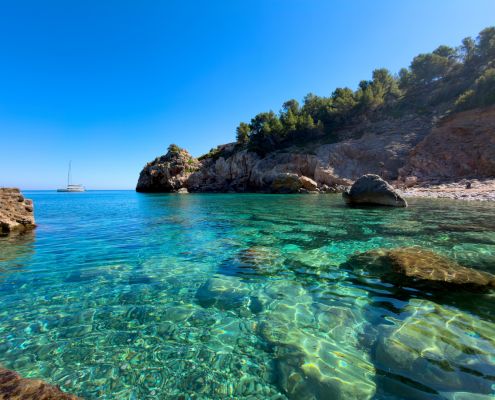
Mallorca does turquoise water pretty well. We think we’ve established that by now. But there’s something different about swimming in the Serra de Tramuntana. Forget long stretches of white sand and rows of sunbeds. Up here, the mountains fall straight into the Mediterranean, roads twist their way through pine forests and tiny coves appear between cliffs when you least expect them.
The result? Some of the most dramatic swimming spots on the island.
The Serra de Tramuntana is a UNESCO World Heritage landscape stretching along Mallorca’s northwest coast, and discovering its coves is as much about the journey as the destination. Expect winding roads, walks downhill, pebble beaches and very few beach clubs. In other words: bring water shoes and a sense of adventure.
Here are five of our favourite coves in the Tramuntana mountain range and, more importantly, why each one deserves a place on your Mallorca list.
The best coves in the Serra de Tramuntana
Cala Deià – swim, lunch, repeat
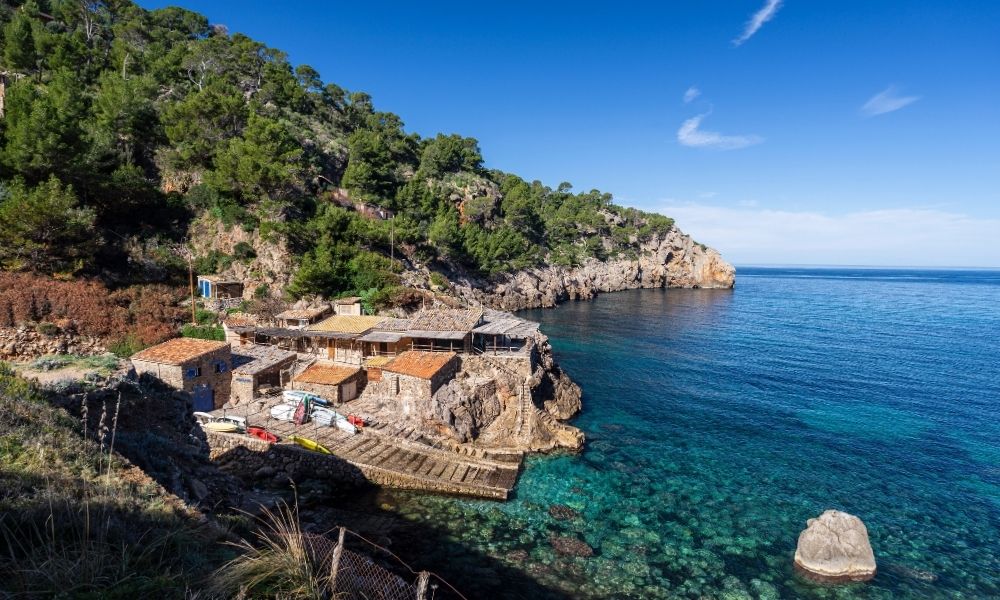
Let’s start with a classic. Cala Deià sits beneath one of Mallorca’s most beautiful villages, surrounded by rocky cliffs, fishermen’s huts and incredibly clear water. Don’t come expecting soft sand. This is a small pebble and rock cove, which is precisely part of its charm.
Our ideal plan? Head to Deià in the morning, walk around the village, make your way down to the cala and spend a couple of hours swimming before lunch. Cala Deià is also one of the Tramuntana coves where you can combine a proper swim with a proper meal: there is a wonderful restaurant right by the water. Which, let’s be honest, makes climbing back uphill afterwards significantly less appealing.
One thing worth knowing: parking around the cala is extremely limited, especially in summer. Walking down from Deià is often the better plan.
Nakar tip: go early, swim before lunch and don’t try to squeeze another three destinations into the same afternoon. Deià deserves some time.
Cala Tuent – the wild one
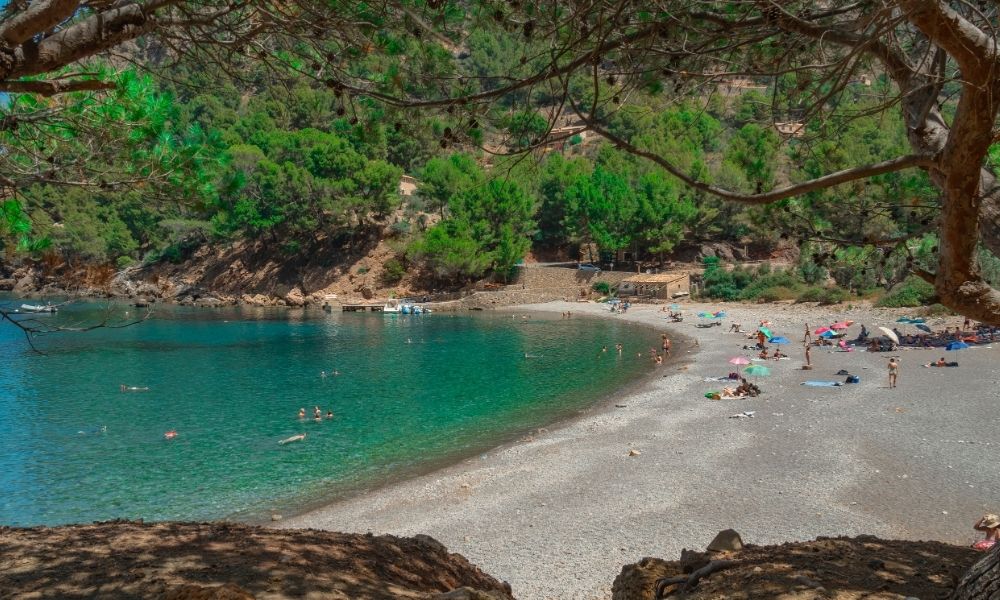
If Cala Deià is charming and social, Cala Tuent is its wilder cousin. Hidden at the foot of some of the highest mountains in Mallorca, Cala Tuent is surrounded by pine forests and the huge landscape of the Serra de Tramuntana. Puig Major, the highest peak in the Balearic Islands, rises behind the area to 1,445 metres.
The beach itself is a mixture of gravel and pebbles, and there is very little development around it.
That’s exactly why you come. Swim, snorkel, float around for a while and look back towards the mountains. Few places make Mallorca’s geography feel quite as dramatic.
Getting there is part of the experience. The road branches off the famous route towards Sa Calobra and involves plenty of curves. Alternatively, you can approach this part of the coast from Port de Sóller by sea.
Nakar tip: if everyone else is heading towards Sa Calobra, take the turn for Cala Tuent. You’ll understand why when you arrive.
Cala Banyalbufar – Tramuntana in its purest form
Cala Banyalbufar isn’t the place to go if your idea of a beach day involves a huge towel, sunbed service and several hours lying on perfect sand. Good.
That’s not why we’re here. Banyalbufar is one of the villages that best captures the agricultural landscape of the Tramuntana, famous for the dry-stone terraces carved into the mountainside. Down below, the coastline is rugged, rocky and wonderfully Mediterranean.
The cala itself is small and reached by heading downhill from the village. Expect stones rather than sand and very little in the way of facilities. What you get in exchange is character.
Our plan would be to explore Banyalbufar first, stop for coffee or lunch and then head down towards the sea for a swim.
And yes, remember: what goes down eventually has to walk back up. Worth it.
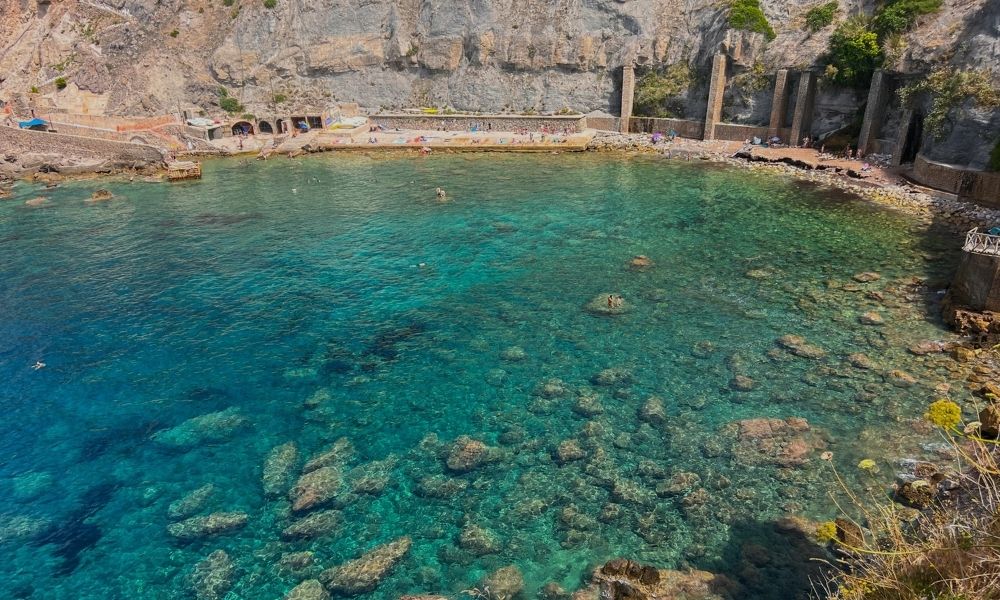
Cala Estellencs – small, rocky and wonderfully quiet
Keep driving southwest from Banyalbufar and you’ll eventually reach Estellencs, one of those tiny Tramuntana villages people somehow manage to drive straight past. Don’t.
Below the village you’ll find Cala d’Estellencs, a wonderfully rugged little fishing cove at the foot of Puig Galatzó. It’s made up of pebbles and large rocks, and a torrent reaches the sea here; after periods of good rainfall, its waterfall adds another layer to an already beautiful setting.
This isn’t somewhere we’d necessarily plan an eight-hour beach day. Instead, make it part of a Tramuntana road trip.
Drive from Palma towards Banyalbufar, continue to Estellencs, wander through the village, walk down for a swim and then slowly make your way towards Andratx. Windows down. Good playlist. No hurry. That’s the plan.
Sa Calobra & Torrent de Pareis – because sometimes the famous ones are famous for a reason
We normally love sending you somewhere slightly unexpected. But occasionally you have to accept that a place became famous because it’s genuinely extraordinary.
Sa Calobra is one of those places. The journey alone is an experience, with the road twisting dramatically through the Tramuntana before eventually reaching the coast.
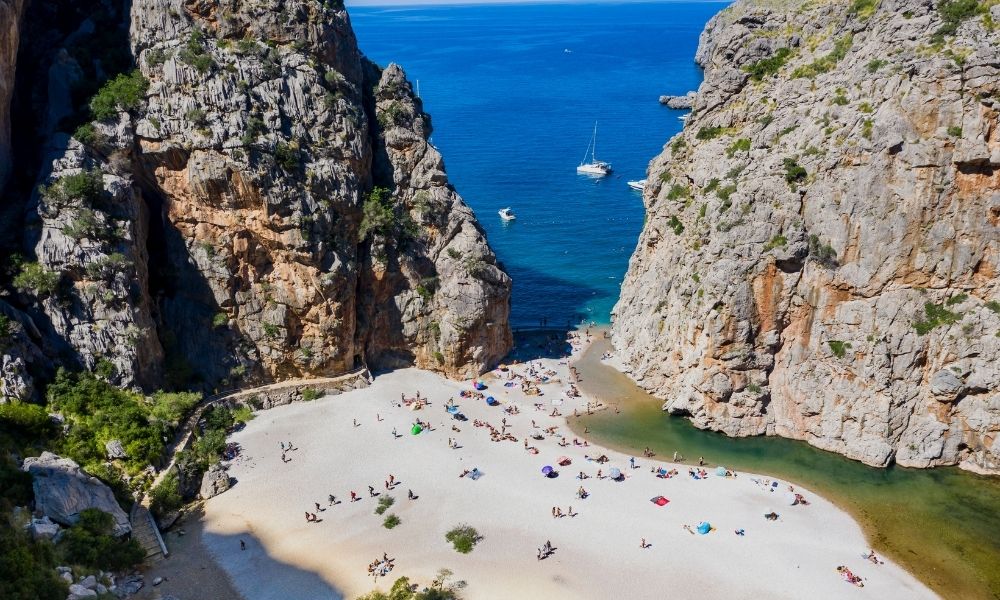
But the real showstopper is the nearby Torrent de Pareis, where enormous limestone walls frame a narrow pebble beach at the mouth of the gorge.
It feels less like arriving at a beach and more like walking into a natural cathedral. And yes, people know about it. Summer gets busy.
Our advice is simple: arrive early, or consider approaching from the sea from Port de Sóller rather than tackling the road at peak time. Cala Tuent is also nearby, so combining the two can make for a spectacular day along Mallorca’s northwest coast.
Nakar tip: this isn’t really a “lie on the beach all day” destination. Come for the landscape, take a swim and enjoy being somewhere that looks absolutely nothing like the Mallorca you saw from the plane.
A few things to know before exploring the Tramuntana coast
The beaches of the Tramuntana play by slightly different rules. Many have pebbles or rocks rather than sand, so water shoes are a very good idea. Facilities can be limited or nonexistent, meaning water and snacks should usually come with you. Access is also part of the adventure. Expect steep paths, narrow mountain roads and limited parking at some of the smaller coves. And pay attention to the sea. Mallorca’s northwest coast is exposed to northerly and westerly conditions, and these small coves can change considerably when there’s swell. Most importantly: don’t rush it.
If you spend the entire day visiting one village, having a long lunch and swimming in one beautiful cala, you haven’t “missed” anything. You’ve probably done Tramuntana exactly right.
From the mountains back to Palma
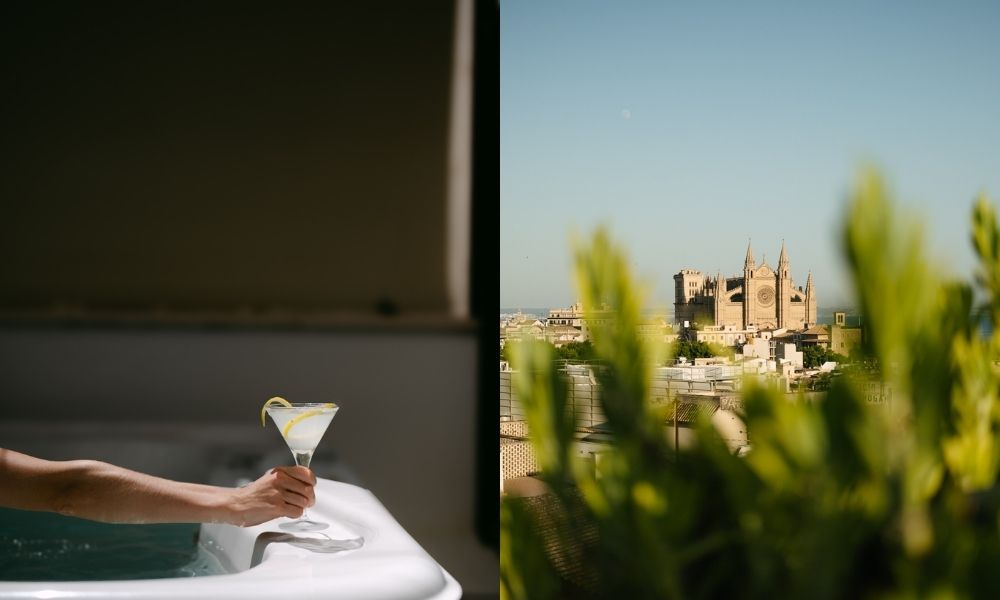
Here’s one of the reasons we love Palma as a base for exploring Mallorca. You can spend your morning driving through the Serra de Tramuntana, swim beneath enormous mountains in the afternoon and still be back in the city for dinner. And after a day of mountain roads and salty swims, Palma feels particularly good.
Back to Nakar Hotel. Shower. Maybe a little spa time. Rooftop for sunset. And then dinner somewhere great.
If you need ideas for that last part, you know where to look: our blog is packed with Palma Guides to our favourite restaurants, new openings and places we genuinely think are worth booking.
Mountains by day. Palma by night. Not a bad way to discover Mallorca.